
2.Client
Overview
The Clients section is used to manage client and counterparty-related information within the CTRM system. It supports the handling of contacts, companies, onboarding, compliance, leads, pipeline activities, and overall client relationship management.
2.1 Contacts
Used to store and manage individual people associated with counterparty organizations. Maintains key information : Name, Email, Phone number
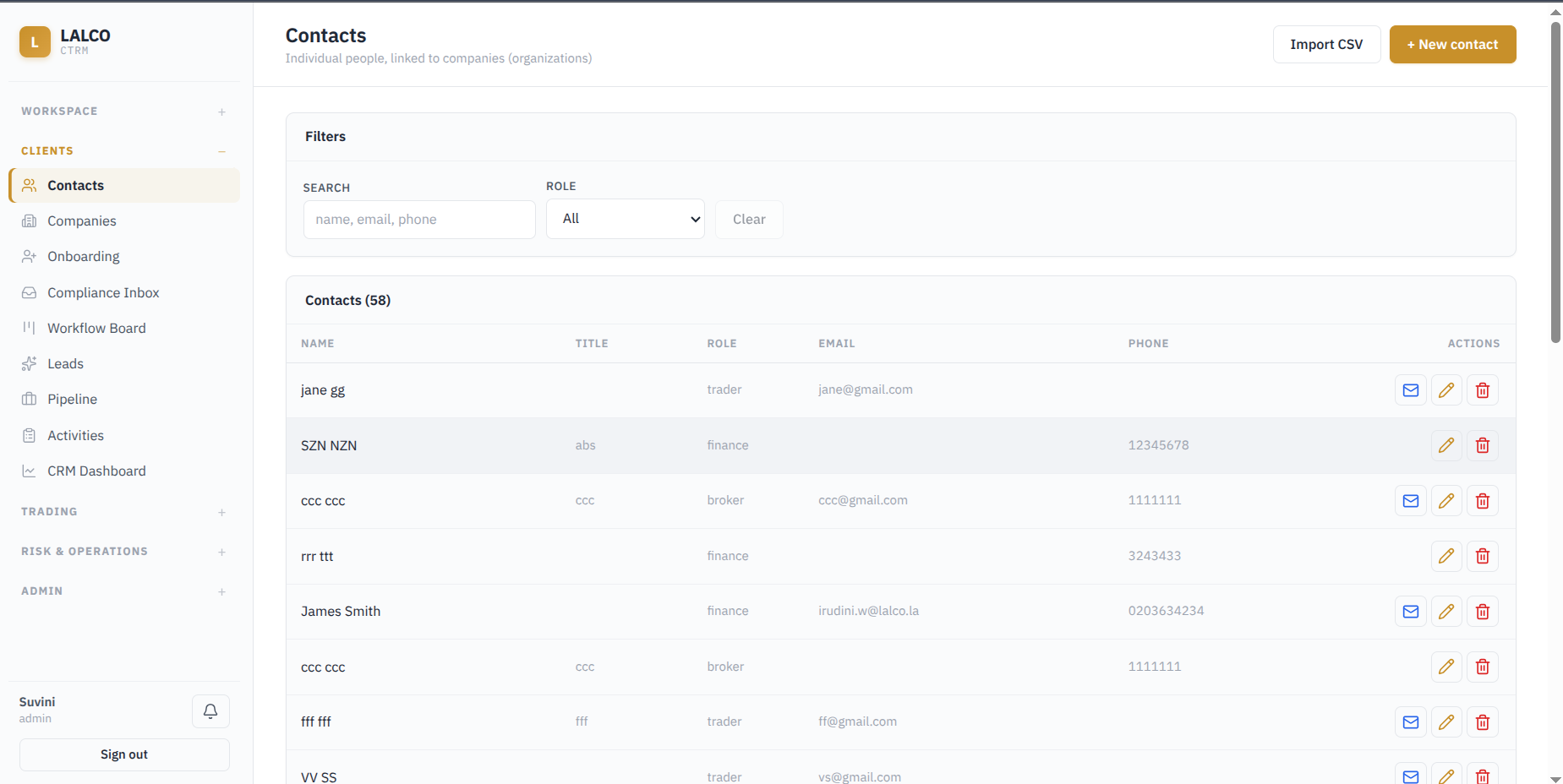
Filters
- Search: Find contacts using name, email, or phone number
- Role: Filters contacts according to their assigned roles
Main Functions
- Add a new contact
- Import contacts using a CSV file
- Edit or delete existing contacts
- Send an email directly when a email address is available
Methods to add a contact
1. Import Contacts from CSV
Allows multiple contacts to be added at once by uploading a CSV file up to 5 MB.
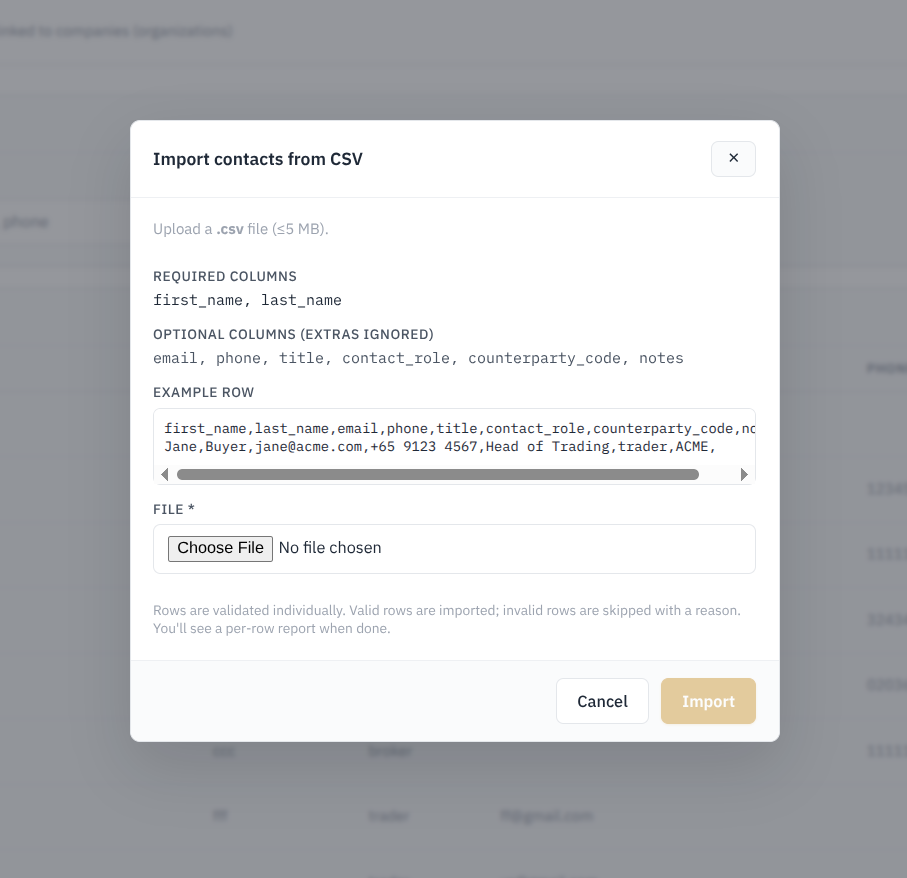
- Required Columns: first_name , last_name
- Optional columns: email, phone, title, contact_role, counterparty_code, notes
- Additional columns that are not required are ignored by the system
- Each row is validated indivually before being imported
- Valid rows are imported, while invalid rows are skipped with the reason provided
- A row-by-row import report is displayed after the process is completed.
Key Characterisitc
Counterparty Code – Identifies the counterparty organization that the contact belongs to. When contacts are imported through a CSV file, this code helps the system link each contact to the correct counterparty automatically.
2. Manual Entry of a company
Allows users to manually create an individual contact record within the system.
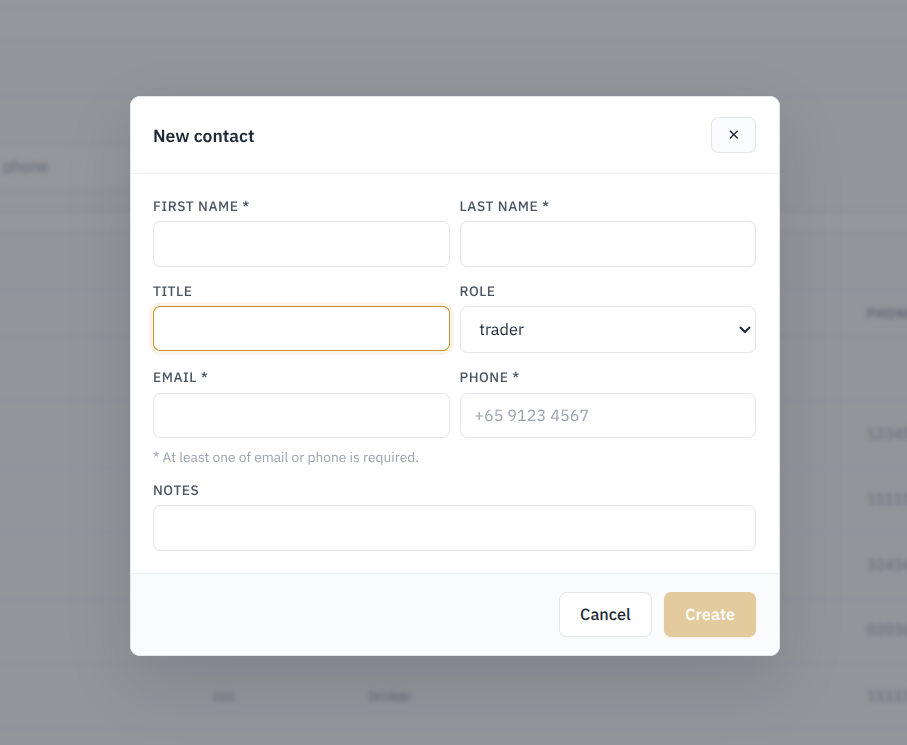
Fields:
- First name
- Last Name
- Title (Job title/position)
- Role (Business role)
- Phone
- Notes
Validations :
- First name and Last name are mandatory
- At least one contact method, either Email or Phone must be provided.
2.2 Companies
Used to manage the organizations that the business trades or works with. Each company is maintained as a counterparty record with its identifying details, type, country, limit, and current status.
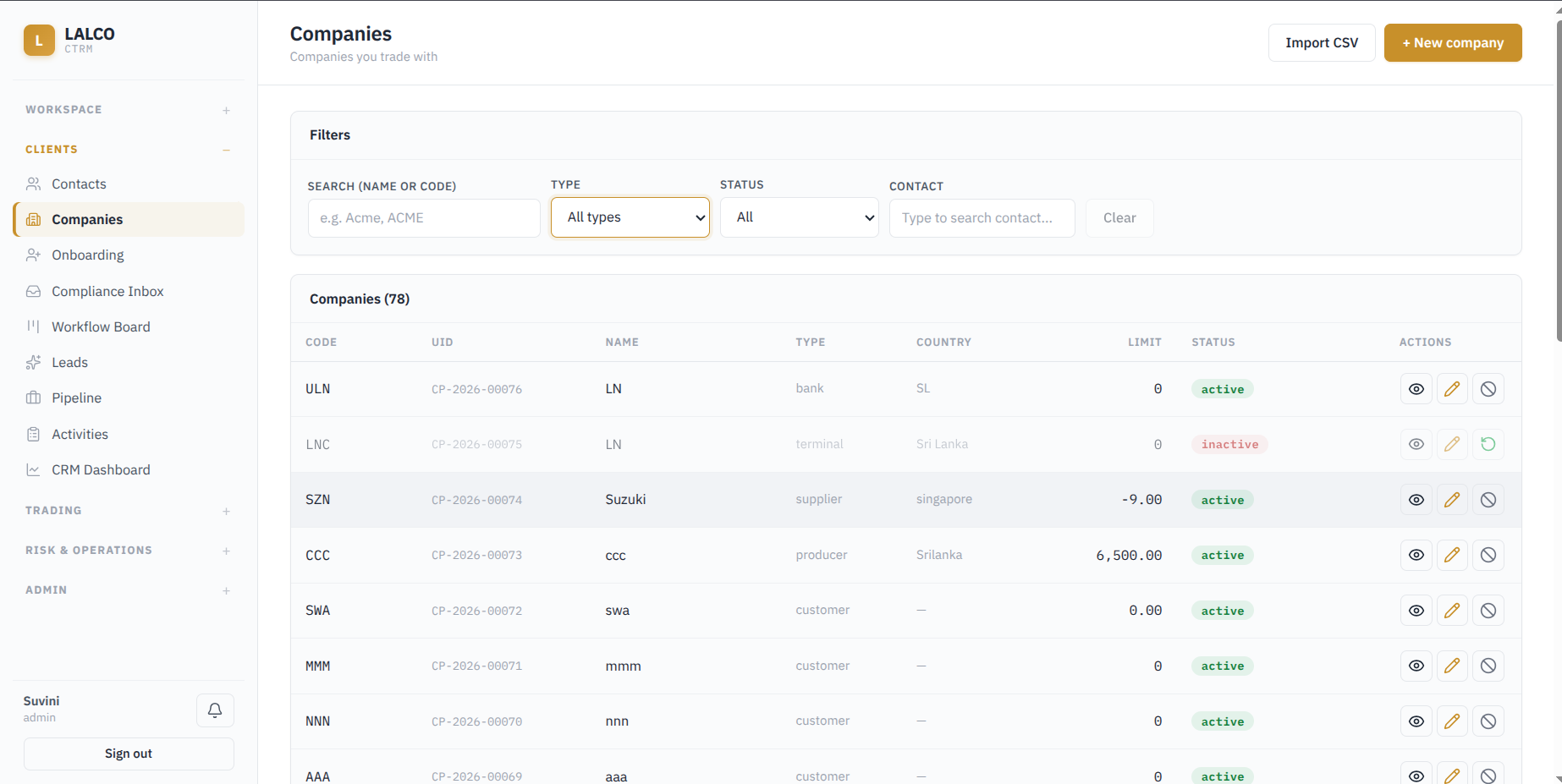
Filters
- Search by name or code - Find a company by company by it's name or company code.
- Type - Filter according to the company type (customer, supplier, producer etc)
- Status - Inactive or active
- Contact - Finds companies associated with a particular contact
Main Functions
- Add a new company.
- Import company records through CSV.
- View company details.
- Edit an existing company.
- Deactivate an active company or reactivate an inactive company.
Methods to add a companies
1. Import companies from csv
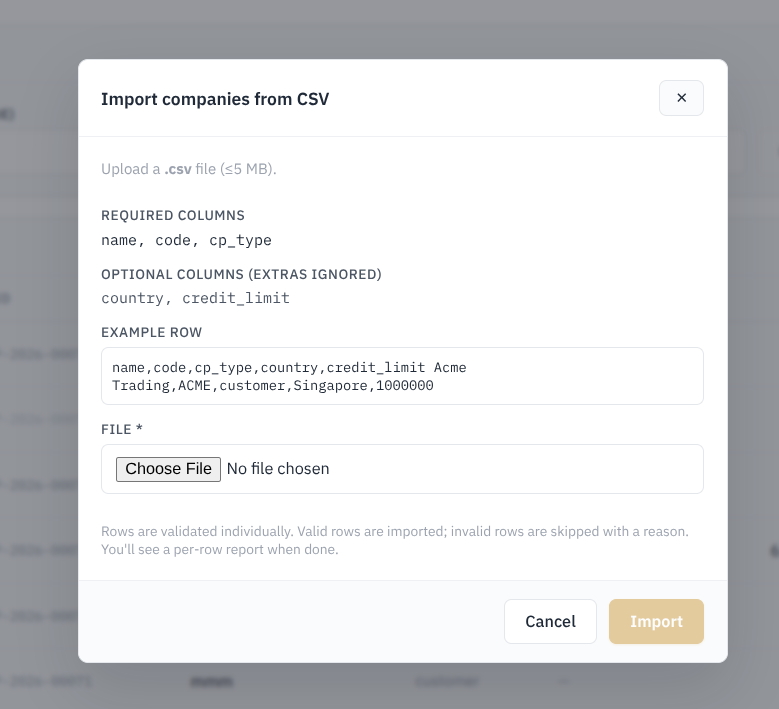
Required columns : Name , Code , CP Type (Counterparty type)
Optional columns: Country, Credit Limit
Validation
Each row in the CSV file is checked separately before import.
- Valid rows are imported successfully.
- Invalid rows are skipped.
- The system provides a reason for any rejected row.
- A row-by-row import report is shown after the import is completed.
2. Manual Entry of a company
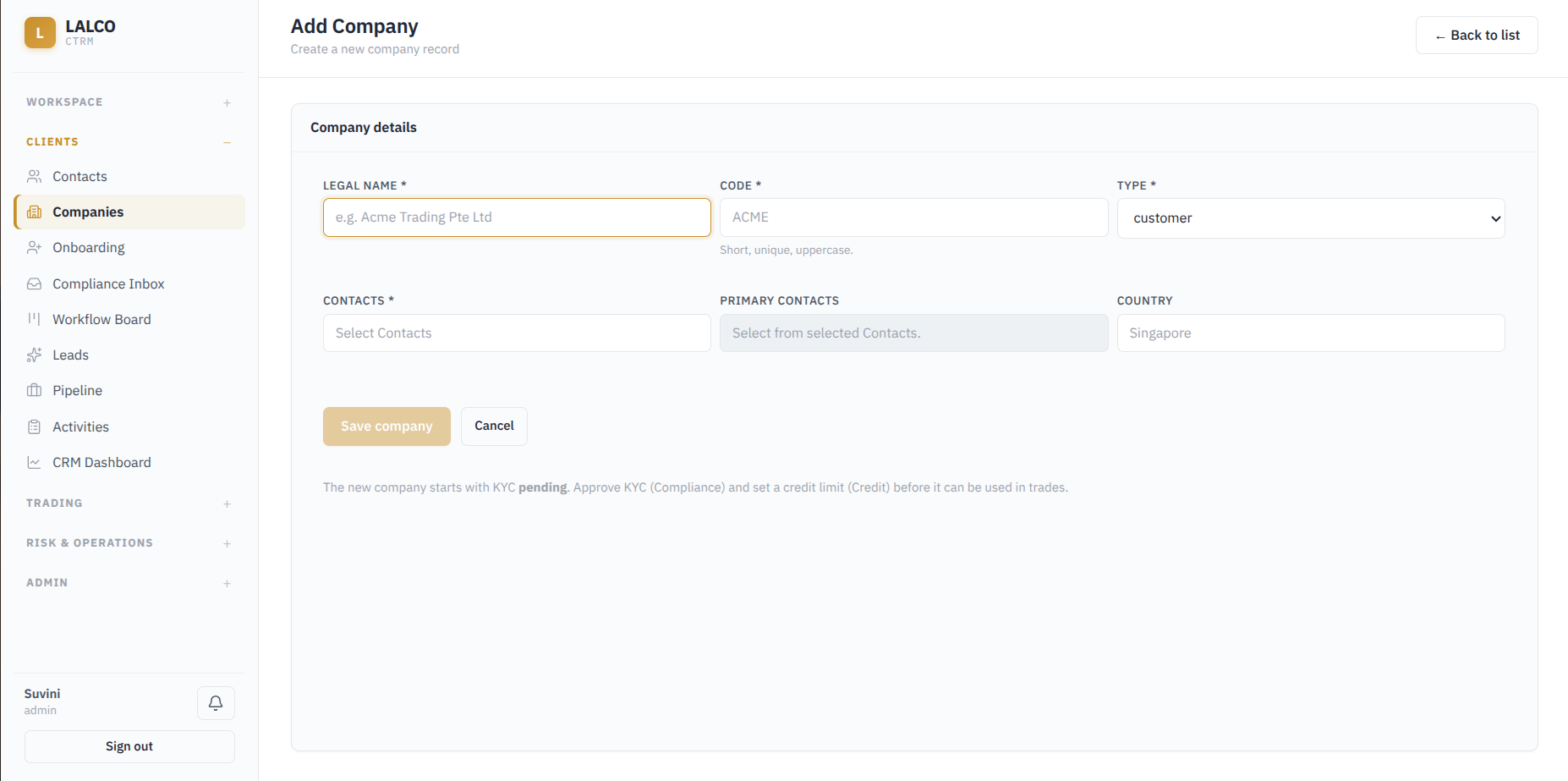
Fields to create a new company
- Legal Name – Official name of the company. Required.
- Code – Short, unique uppercase code used to identify the company. Required.
- Type – Defines the counterparty type, such as customer. Required.
- Contacts – Links existing contacts to the company. Required.
- Primary Contacts – Identifies the main contact person from the selected contacts.
- Country – Country associated with the company.
Key Requirement
A newly created company starts with KYC (Know Your Cusomter) Pending status. Before the company can be used in trades:
- KYC must be approved through the Compliance process.
- A credit limit must be assigned through the Credit process.
Displayed details
- Code – Short code assigned to the company.
- UID – Unique system identifier for the company.
- Name – Company name.
- Type – Classification of the company.
- Country – Country in which the company is associated or registered.
- Limit – Limit value configured for the company.
- Status – Indicates whether the company is currently active or inactive.
View Company
The View Company page provides a complete profile of the selected company and brings together its related information in one place.
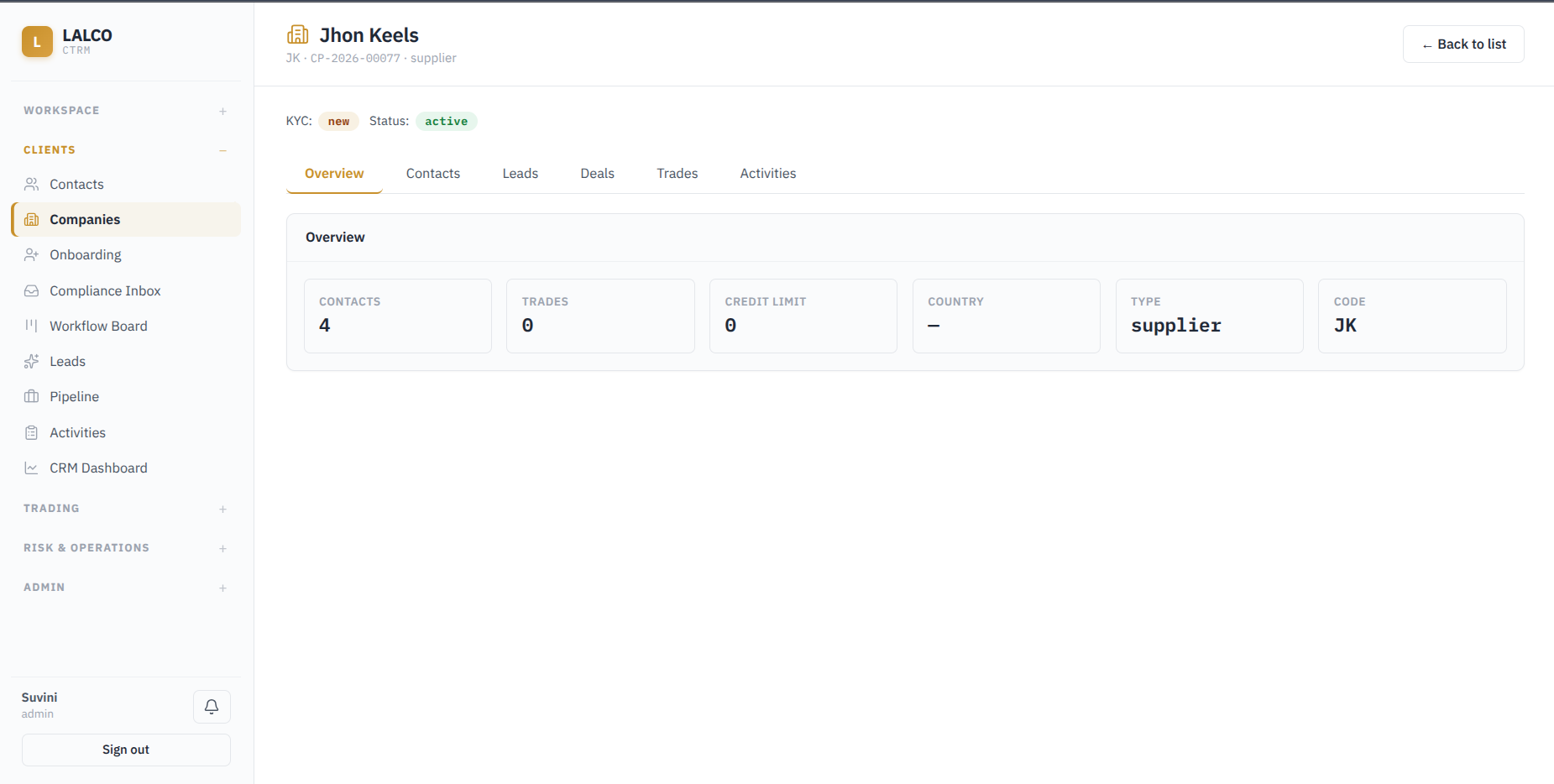
Provides a summary of :
- Contacts – Number of contacts linked to the company.
- Trades – Number of trades associated with the company.
- Credit Limit – Current credit limit assigned to the company.
- Country – Country associated with the company.
- Type – Counterparty type, such as supplier or customer.
- Code – Short code used to identify the company.
Edit Company details
- Legal Name – Updates the official company name.
- Type – Changes the counterparty type, such as supplier or customer.
- Country – Updates the country associated with the company.
- Status – Changes whether the company is active or inactive.
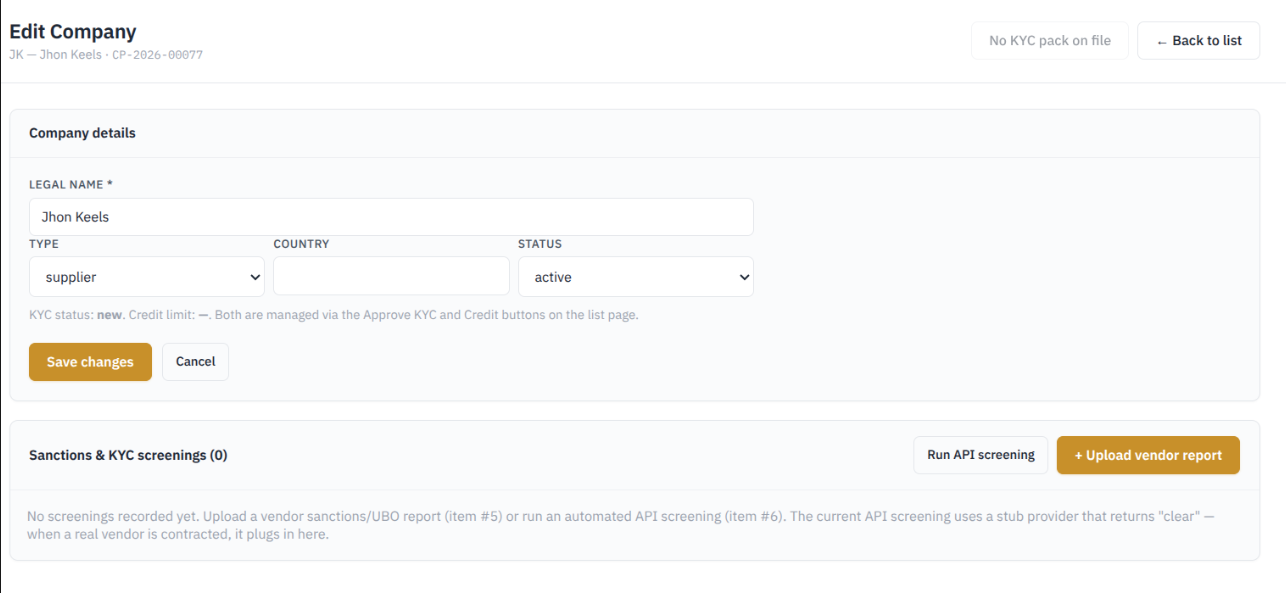
The KYC status and Credit Limit cannot be changed directly from this page. These are managed separately through the relevant KYC approval and credit functions.
Sanctions & KYC Screening
Used to record checks performed on the company as part of the KYC and compliance process.
- Run
API
Screening–
Performsan
automated screening of the company. Currently, the system uses a test/stub screening provider (To be edited) - Upload Vendor Report – Allows a sanctions or UBO (Ultimate Beneficial Owner) screening report obtained from an external provider to be uploaded.
- Previous screening results are recorded in this section when available
2.3 Onboarding
The Onboarding module is used to manage potential companies before they become approved counterparties. It helps track leads through the early sales, onboarding, and KYC stages.
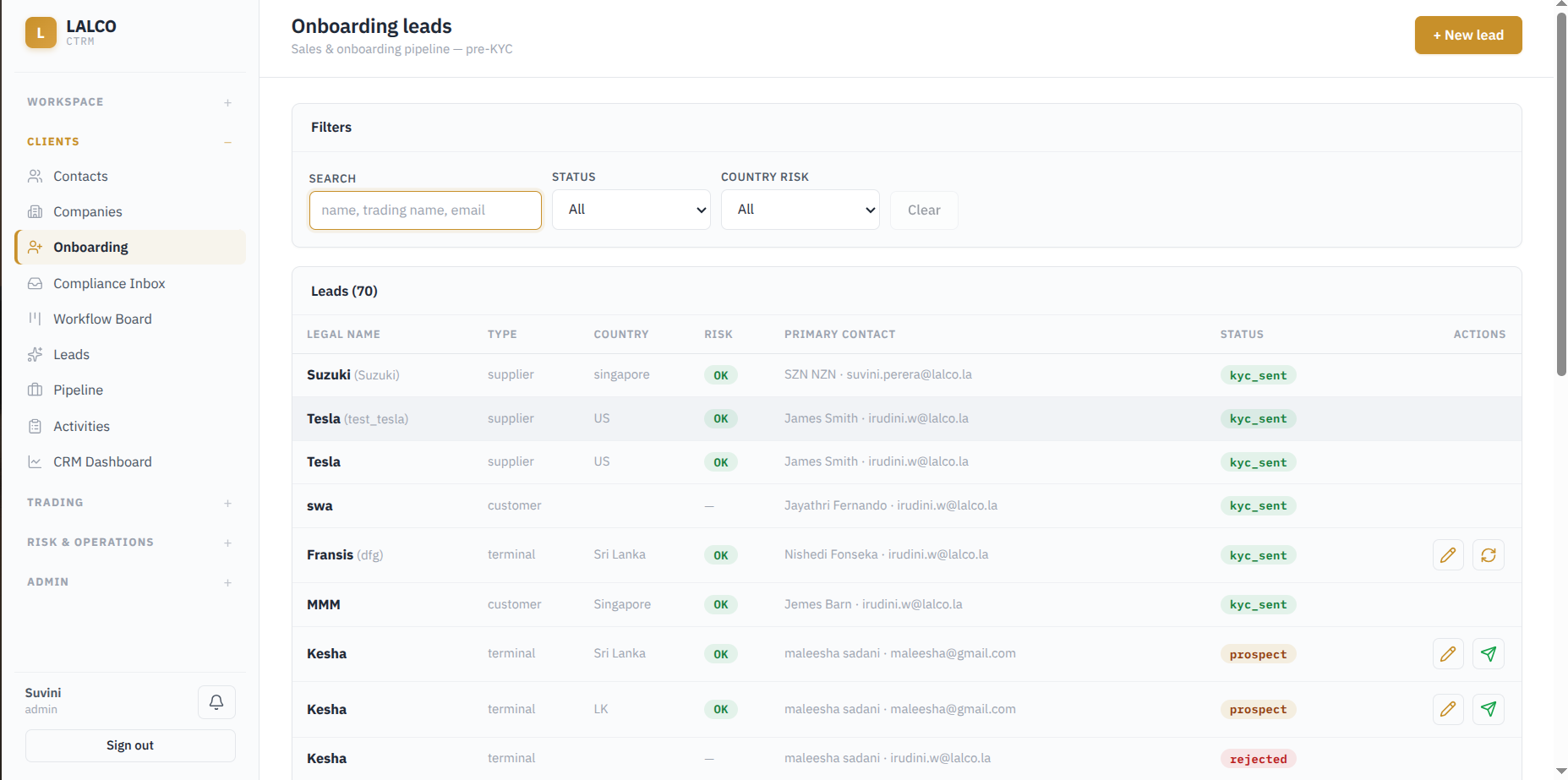
Filters
- Search – Finds leads using the legal name, trading name, or email.
- Status – Filters leads according to their current onboarding status.
- Country Risk – Filters leads based on the risk level associated with their country.
Leads information displayed
- Legal Name – Official name of the potential company.
- Type – Counterparty type, (eg: - customer, supplier, or terminal.)
- Country – Country associated with the lead.
- Risk – Indicates the country risk result.
- Primary Contact – Main contact person associated with the lead.
- Status – Shows the current stage of the onboarding process.
Status of the onboarding leads
- Prospect – The company is still a potential counterparty and has not yet moved through the KYC process.
- KYC Sent – The KYC request has been sent and the lead is progressing through onboarding. (documents are expected for review)
- Rejected – The lead has been rejected during the onboarding process.